
After Attending IPPE, I Became Even More Certain of One Thing
In today's environment, customers are redefining the value of ring dies and roller shells.
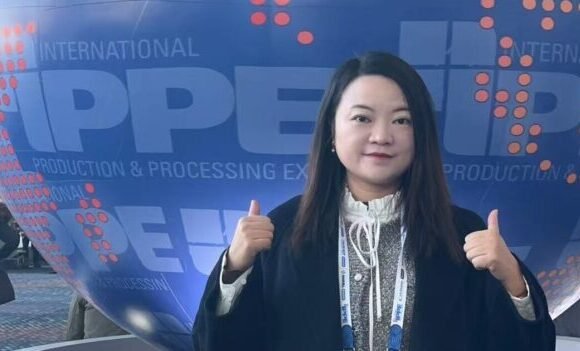
IPPE is widely regarded as one of the largest and most professional exhibitions in the global feed, livestock, and food processing industries.
Every year, it brings together feed producers, equipment manufacturers, plant managers, and engineers from all over the world.
For me, however, the value of IPPE has never been limited to product showcases.
It serves as a highly concentrated window into the industry — a place where, in a very short time, you can clearly see how customers in different markets and at different stages are responding to the same set of pressures.
After attending IPPE again this year and spending time in real conversations with customers from different countries and plant sizes, one realization became increasingly clear to me:
Customers are not becoming more demanding — they are being forced to become more rational by today's economic reality.
And this rationality is showing up very clearly in how they now look at ring dies and roller shells.
1. As Economic Pressure Increases, How Feed Producers Discuss Ring Dies and Roller Shells Is Changing
If we look back a few years, many discussions at IPPE focused on:
- New equipment
- Higher capacity
- Faster expansion
This time, the keywords I heard repeatedly were different:
- Stable operation
- Predictability
- Risk control
- Downtime cost
In this context, ring dies and roller shells are no longer viewed simply as consumables.
They are now part of much more serious discussions, because more customers are asking themselves a very practical question:
Is this component contributing to more predictable and stable operation over time?
2. What Customers Care About Is Shifting in Subtle but Meaningful Ways
During conversations at IPPE, I noticed that the way customers ask questions has changed.
Instead of focusing mainly on price, they are more likely to ask:
- Will the operation remain stable in real production?
- Are the results predictable over time?
- Can this help reduce abnormal load and unplanned downtime?
- Are there early signals we can detect before problems escalate?
- Can pellet output be improved through better ring die and roller shell matching, rather than simply pushing parameters harder?
Key Takeaways from IPPE Conversations
- Feed producers are placing greater emphasis on operational stability and predictability.
- Ring dies and roller shells are increasingly viewed as part of a long-term operating strategy.
- Price remains important, but risk control and downtime reduction now carry more weight in decision-making.
In daily pellet mill operation, these concerns rarely appear as abstract questions.
They usually emerge through very concrete and familiar symptoms.
In practice, these concerns often show up as uneven wear on ring dies and roller shells, unstable pellet quality, fluctuating motor load, or localized blockage that gradually worsens over time.
Behind these questions is not a search for the lowest price,but for greater control and better overall value.
3. What This Means for Customers: A Different Way of Thinking
From the customer's perspective, this shift actually makes a lot of sense.
In today's environment, an increasingly important realization is this:
Ring dies and roller shells should not be treated as one-time purchasing items, but as part of an overall operating strategy.
This means:
- Looking beyond a single performance indicator
- Focusing more on long-term operational behavior
- Paying closer attention to how uncertainty is reduced
This approach does not necessarily make decisions easier.
But in many cases, it leads to more stable and reliable outcomes.
4. These Changes Are Also Forcing Us to Re-Examine Our Own Role
To be honest, these shifts on the customer side are also a reminder to us.
If we only manufacture according to drawings and quote according to specifications, it becomes difficult to truly respond to these new expectations.
At Hayne, we have become increasingly clear over the past few years that
the real value of ring dies and roller shells is not how good they look on paper, but how stable and predictable they are in long-term operation.
This is why we are more willing to:
- Spend more time upfront understanding real operating conditions
- Clarify potential risks during the confirmation stage
- Absorb more uncertainty internally, rather than passing it on to the production site
These choices do not always make things faster.
But very often, they make the results more reliable.
5. What We Ultimately Care About Is Long-Term Operational Certainty
In the current environment, one belief has become even stronger for me:
Truly valuable ring dies and roller shells are not those that perform well once, but those that remain controllable over time.
This is the position we continue to stand by —
not rushing to give answers, not rushing to make decisions, but first making sure the judgment itself is sound.
Final Thoughts
For me, IPPE has never been just a stage for displaying products.
It is more like a mirror, reflecting the real changes taking place across the industry.
In an uncertain economic environment, customers are redefining the value of ring dies and roller shells.
A Clear Shift Observed After IPPE
Taken individually, many of these conversations may seem minor.
But when you hear them again and again, across different markets and plant sizes, they clearly reflect a shift in how feed producers evaluate components today.
Our response is simple: we choose to take a more restrained, long-term approach.
If You’re Facing Similar Questions in Daily Operation
If the topics discussed above reflect challenges you are currently facing in your own production, you may find the following articles helpful:
How to Inspect and Maintain Ring Dies for Pellet Mills
Top 5 Pellet Mill Ring Die Problems (2025)
What Are the Different Types of Roller Shells and How to Choose?
About the Author
This article is written by the Hayne team, based on long-term experience supplying ring dies and roller shells to feed producers worldwide.