
Initial Troubleshooting For Poor Pellet Durability(PDI)
What I Usually Look At First When Customers Ask Me This Question
Over the years, I have heard the same confusion again and again:
“The pellets look fine in the plant. The Pellet Durability Index(PDI) test is acceptable. But after transportation, there is too much fines.”
To be honest, this is one of those problems that looks simple at first, but often is not.
The first reaction is usually also very familiar:
- maybe the ring die is not right
- maybe the compression ratio is too low
- maybe the holes need to be tighter
But after years of working on pellet mill projects, and then spending nearly 20 years in pellet mill spare parts while hearing real feedback from customers, I've spoken with many professionals in this field. And there is one thing I've learned very clearly:
Transport usually does not create the weakness. It exposes it.
That is why I never like to judge this kind of problem from one point only.
If pellets break down after transport, I do not want to know only what the final complaint is.
I want to know where the problem started to show up.
If pellets look acceptable in the plant but break down during transport, the cause is usually not one factor alone. In my experience, the first things to check are where PDI starts to fall, whether the formula changed, whether cooling or oil addition adds hidden weakness, and whether the die parameters still match the application.
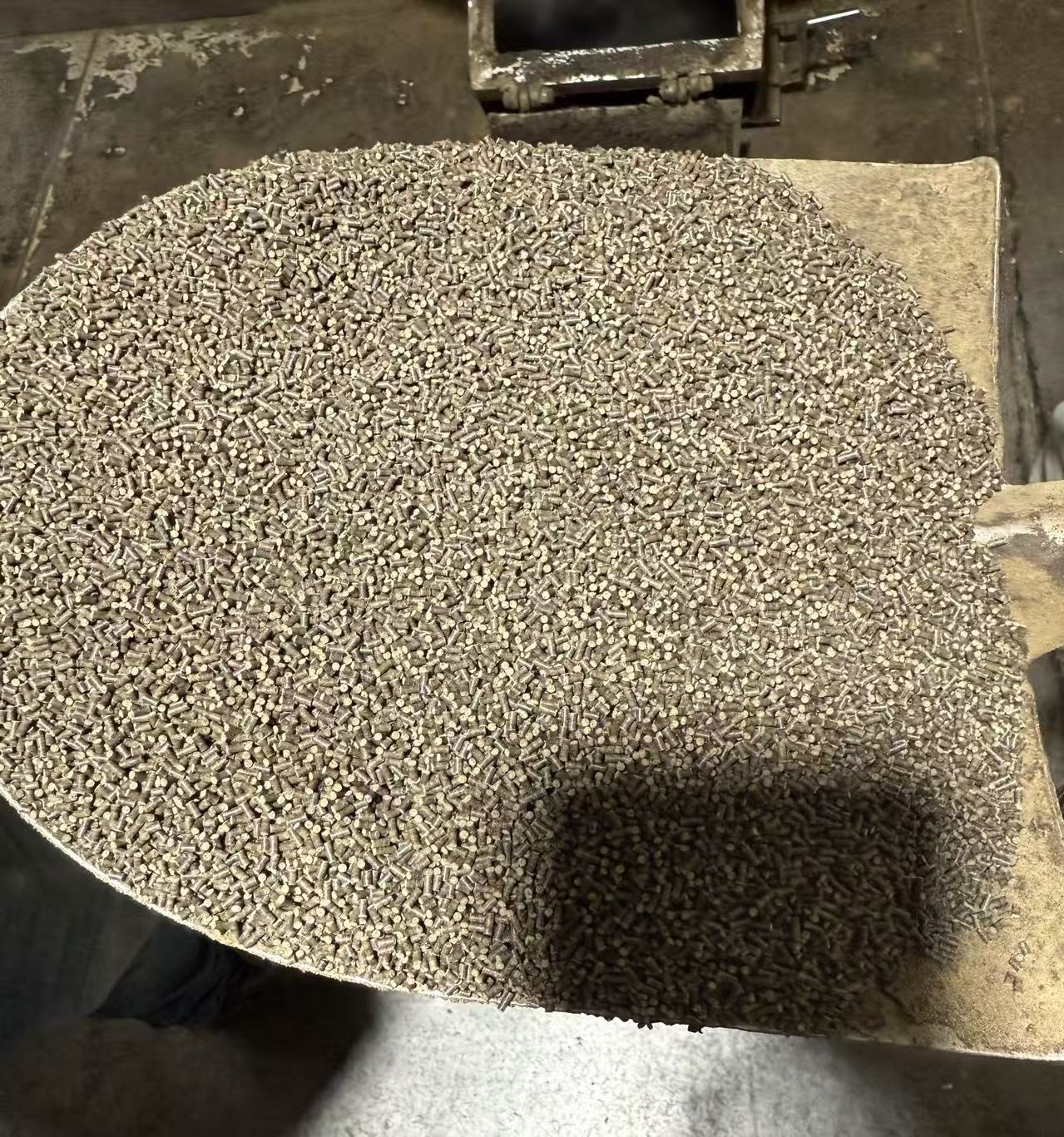
Pellets may look acceptable right after production, but weak internal bonding often shows up later during transport, loading, and unloading.
Plant PDI VS. Transport PDI: Why good PDI in the plant does not always mean good PDI after transport
A lot of plants check PDI shortly after cooling. There is nothing wrong with that.
The problem is that plant testing is still very different from real transport.
In actual delivery, pellets still have to go through:
- bucket elevators
- bins and spouting
- loading impact
- road vibration
- repeated handling
- sometimes sea shipment for weeks or even longer
So when someone tells me, “The pellets were good in the plant, but the customer received too much fines,” I do not immediately say, “This must be the die.”
My first question is usually much simpler:
Did the pellet really have stable structure, or did it only look good for a short time?
That difference matters a lot.
What I usually see on site
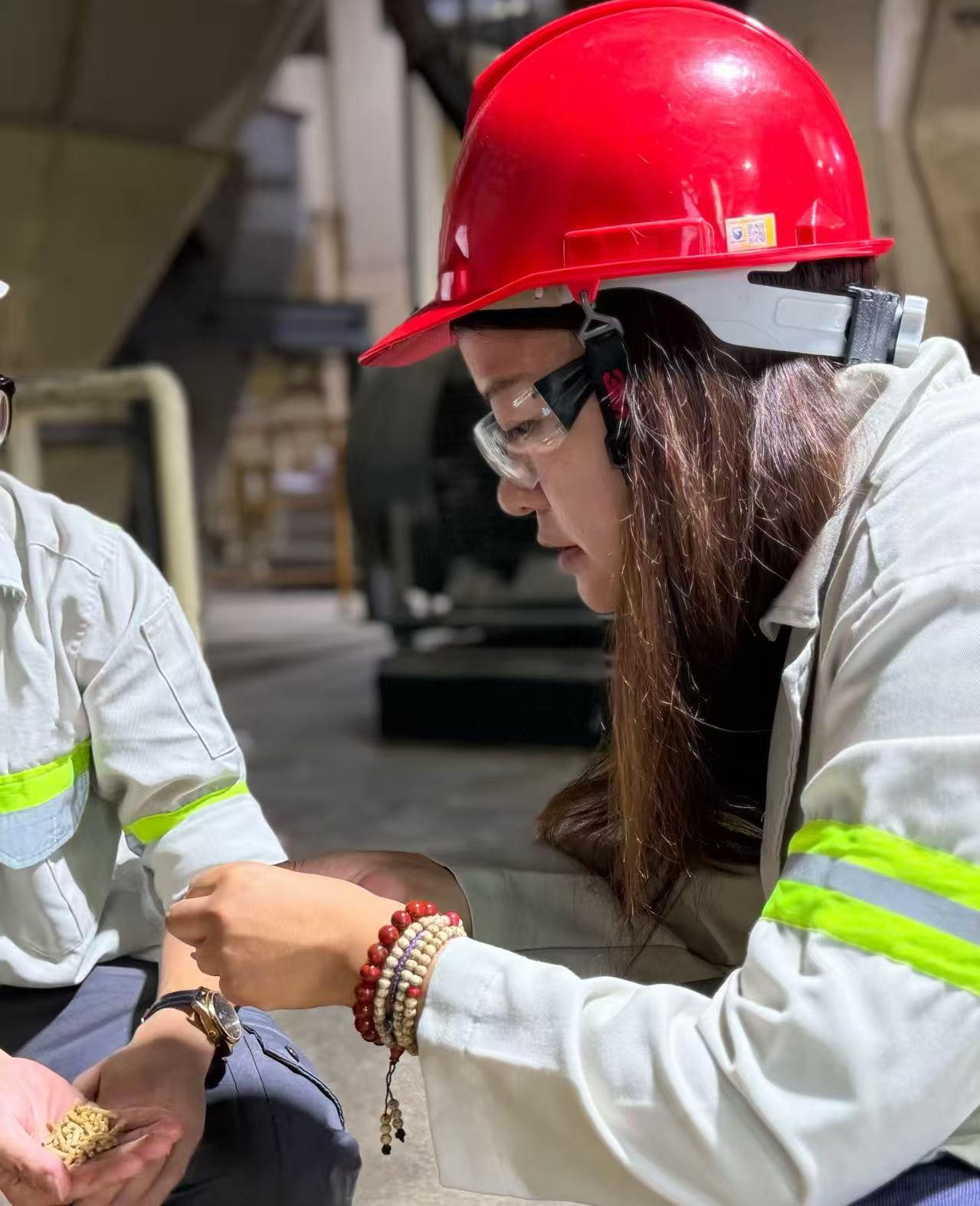
Before talking about theory, I think it helps to look at how this problem usually appears in real plants.
| What people see | Common first reaction | What I usually think first |
|---|---|---|
| PDI looks acceptable in the plant, but fines increase after transport | “The ring die must be the problem.” | Conditioning, cooling stress, downstream handling, or die parameters no longer matching the formula |
| Pellets look hard when they come out, but break during loading or unloading | “The compression ratio is too low.” | Internal bonding is weaker than it looks |
| High-fiber feed shows more fines after transport | “We need a tighter die.” | Formula, conditioning, and hole design may all need to be checked together |
| Broiler feed becomes worse after shipping | “Cooling must be the problem.” | Cooling may matter, but oil addition may also be involved |
That is why I always treat transportation PDI as a system question, not just a die question.
If you are facing a similar issue, you are welcome to contact me for discussion.
Key Factors Affecting Pellet Quality: compression ratio, conditioning, cooling, raw materials, oil addition, or something else
This is where many people get stuck.
Because once pellets start breaking, it is very easy to look at the wrong thing first.
I usually begin with two simple questions:
- At which stage did the pellets start getting worse?
- What changed recently?
Those two questions already remove a lot of confusion.
First, look at where the problem starts
This is still one of the most useful ways to judge direction.
| Where the problem starts to show up | What I check first |
|---|---|
| Pellets already feel weak right after pelleting | Formula, conditioning, grinding size, compression ratio / hole design matching |
| PDI drops right after cooling | Cooling, conditioning, or weak internal structure from the start |
| Pellets look acceptable after cooling, but become worse after elevators or conveying | Cooling-related brittleness, downstream impact, or weak internal bonding |
| Pellets are acceptable before oil addition, but worse after | Oil level and oil distribution |
| Plant test looks normal, but transport complaints are much worse | Cooling stress, oil addition, handling damage, or a process setup that was only marginally acceptable in the first place |
| The problem changes with weather, shift, or throughput | Cooling stability, steam condition, or operating variation |
| The problem appears mainly with one formula or one raw material batch | Formula structure, raw material consistency, or grinding variation |
That is why I do not like to ask only, “Is PDI low?”
I would rather ask:
“When does it start getting worse?”
That question usually tells me much more.
When the problem points more to compression ratio or hole design
To me, a compression ratio problem is usually not just “pellets break.”
It is more like this:
The die setup no longer matches the formula, the conditioning, or the production target.
Here are the signs I usually pay attention to.
1. The formula changed, but the die parameters did not
This is one of the most common situations.
For example:
- fiber went up
- starch went down
- oil level changed
- raw material source changed
But the same die design is still being used.
Then the plant starts to notice:
- pellets can still be made
- but PDI becomes less stable
- transport fines increase
- customer feedback becomes worse than before
When I see that pattern, I strongly suspect that the die setup no longer matches the formula.
That does not mean the die was wrong before.
It simply means it may no longer be right now.
2. Pellets form, but they never feel really compact
Sometimes pellets are still coming out, but they always feel a bit weak.
Typical signs are:
- surface looks acceptable, but the pellet feels slightly loose
- PDI stays on the low side for a long time
- cooling does not improve the result much
- pellet edges wear too easily
If conditioning is stable and raw materials are not showing an obvious problem, this often makes me look at whether compression ratio is too low or effective working length is no longer enough.
3. Production rate was pushed higher, and pellet quality started to fall
I have seen this more than once.
At moderate load, the pellets were acceptable.
After throughput was pushed higher, PDI started to drop, especially in transport.
That also makes me look at die matching.
Because some die parameters can still work under moderate load, but once production goes higher, the material no longer behaves the same way inside the hole.
4. Sometimes the problem is too much compression, not too little
This is worth saying clearly.
A lot of people see poor PDI and want to increase compression ratio immediately. But sometimes the real problem is the opposite.
For example:
- pellets come out very hard, but also brittle
- the surface looks good, but edges break during transport
- output drops
- amperage becomes high
- temperature goes up too much
That makes me think the die may be too tight, or the way stress is released inside the hole is no longer suitable.
Signs that point more to compression ratio or die matching
| What I see | What I tend to think |
|---|---|
| PDI gets steadily worse after a formula change | Compression ratio / hole design may no longer match the formula |
| Pellets form, but never feel compact enough | Compression ratio may be too low, or effective working length may be insufficient |
| PDI drops after production rate is increased | Die setup may no longer match the higher load |
| Pellets are hard but brittle, and edges break in transport | Compression ratio may be too high, or internal stress may be too high |
| High amperage, lower output, good-looking pellets, but poor transport durability | I first suspect too much compression or poor stress release inside the hole |
When the problem points more to conditioning
To be honest, this is one of the most commonly overlooked causes.
A lot of PDI problems get blamed on the die, but the real weakness started earlier.
If steam dryness is poor, if temperature is unstable, if retention time is too short, or if moisture distribution is uneven, pellets may still form. But the internal structure will not be as strong as people think.
That kind of pellet can be misleading:
- it may not look bad
- it may even feel fairly hard at first
- but it does not hold up well once vibration and impact begin
Signs that point more to conditioning
| What I see | What I tend to think |
|---|---|
| Pellets look acceptable, but always feel less solid than they should | Conditioning may be insufficient |
| The same die performs well sometimes and poorly at other times | Steam or conditioning stability may be fluctuating |
| Small changes in steam, temperature, or retention time quickly improve PDI | The real cause is more likely conditioning than die design |
| Pellets survive short plant checks, but not transportation | Internal plasticization and bonding may be incomplete |
What I usually check in conditioning
| What I check | Why it matters |
|---|---|
| Steam condition | Poor steam quality means poor plasticization |
| Temperature stability | If temperature moves too much, pellet structure becomes inconsistent |
| Retention time | Short retention often means incomplete conditioning |
| Moisture uniformity | Uneven conditioning gives uneven pellet quality |
Many problems that look like die problems actually start here.
When the problem points more to cooling
Cooling problems have a very typical character:
the pellet may still look acceptable at first, but problems begin to appear later.
That “later” part is important.
1. Plant test looks fine, but pellets break after conveying or transport
This is very typical of cooling-related internal stress.
Right after pelleting, temperature and moisture are still high inside the pellet. If cooling is too fast or uneven, the outside may harden first while the inside is still settling.
That kind of pellet can survive a short test.
But it often cannot survive repeated vibration and handling.
2. The result changes with weather, shift, or cooler load
This also often points to cooling.
Compression ratio is fixed.
Cooling problems usually move more with:
- day shift and night shift
- summer and winter
- different throughput levels
- different cooler loads
3. Pellets are not generally loose — they are chipped, cracked, or edge-damaged
Cooling stress and downstream impact often show up together.
If the pellet already contains internal stress, then elevators, spouting, and loading will show it as:
- broken edges
- chipped surfaces
- reduced pellet integrity
- fines increasing after downstream handling
Signs that point more to cooling
| What I see | What I tend to think |
|---|---|
| Short plant test is acceptable, but pellet quality drops later in handling | Cooling and downstream impact should be checked first |
| Results change with weather, shift, or cooler load | Cooling stability is a strong suspect |
| Pellets show chipping, edge damage, or surface cracking | Cooling stress plus handling damage is likely |
| Problems are small in the plant, but much worse after transport | Cooling may have left hidden weakness inside the pellet |
When the problem points more to raw materials or formula
Raw material problems usually have one strong feature:
they move together with formula changes or batch changes.
That is why one of my first questions is often very simple:
“Has anything changed in the formula or raw materials recently?”
1. The problem starts after a supplier change or a new batch
This is very typical.
For example:
- one ingredient comes from a different source
- moisture variation becomes larger
- fiber structure changes
- grinding distribution becomes different
Then you may see:
- same machine
- same die
- same operators
- but noticeably different pellet performance
2. Some formulas are always more difficult than others
If one formula keeps showing PDI problems while another formula runs normally on the same line, I would first study the formula itself.
Especially if:
- high-fiber formulas are clearly worse
- lower-starch formulas are worse
- higher-oil formulas are worse
- formulas with unstable particle size are worse
3. One batch is poor, the next batch is better
In this kind of case, I rarely change compression ratio first.
Because compression ratio is fixed.
If the problem follows raw material variation closely, then raw material consistency is usually the bigger issue.
Signs that point more to raw materials or formula
| What I see | What I tend to think |
|---|---|
| The problem starts after a supplier or batch change | Raw material consistency and formula structure should be checked first |
| Same machine and same die, but different formulas behave very differently | Formula is likely the main variable |
| High-fiber formulas are clearly worse | Formula structure is a key factor |
| One batch is poor, the next batch is better | Raw material variation is more likely than a die design problem |
When the problem points more to oil addition
This is especially common in broiler feed.
The simplest way to judge it is this:
compare the pellet before and after liquid application.
That comparison can be very revealing.
1. Pellet is acceptable before oil addition, but clearly worse after
If you find that:
- PDI is still acceptable before liquid application
- but drops clearly after oil addition
- and transport fines become worse after that
then post-pellet liquid application has to be checked carefully.
2. The problem is concentrated in high-oil formulas
If the problem mainly appears in:
- high-oil formulas
- broiler feed
- products with post-pellet liquid application
then oil addition becomes one of the first things I want to study.
3. Pellets become more slippery and wear more easily during transport
Oil-related problems do not always make pellets fall apart immediately.
More often, they make pellets lose integrity more easily during movement, rubbing, and handling.
Signs that point more to oil addition
| What I see | What I tend to think |
|---|---|
| Pellet is acceptable before oil, but much worse after oil | Oil level and distribution should be checked first |
| High-oil formulas are clearly more sensitive | Oil addition is a key variable |
| Pellets show more wear and fines during transport | Oil may be reducing surface stability |
| The problem becomes much worse only after the oil application stage | Post-pellet liquid application should be investigated first |
Other factors I do not like to ignore
If the goal is to really help the customer, I do not think it is enough to stop at compression ratio, conditioning, cooling, formula, and oil addition.
A few other things can matter a lot too.
Grinding size and particle size distribution
Even with the same formula and the same die, PDI can change a lot if particle size distribution changes.
| What I see | What I tend to think |
|---|---|
| Formula is basically unchanged, but pellet stability becomes worse | Grinding size may have changed |
| Large variation between coarse and fine particles | Internal bonding may be uneven |
| Certain weak batches follow grinding performance changes | Grinding system should be checked |
Ring die wear, blocked holes, or hole surface condition
Not every die-related problem is a compression ratio problem.
Sometimes the die was suitable at first, but wear or hole condition changed the real working behavior.
| What I see | What I tend to think |
|---|---|
| PDI gradually declines after some running time | Hole wear or effective working condition may have changed |
| Pellet quality is uneven in certain areas | Local hole blocking or local wear |
| New die performs well, old die performs worse with the same setup | Wear or hole surface condition is more likely than design alone |
Roller-to-die gap or uneven working condition
Sometimes the issue is not the design itself, but how the die and rollers are actually working together.
| What I see | What I tend to think |
|---|---|
| One side looks better than the other | Roller gap may be uneven or eccentric |
| Certain zones produce weaker pellets | Roller working condition may be uneven |
| Different operators get very different results from the same setup | Adjustment and operating consistency should be checked |
Load and machine operating condition
Some settings work reasonably well at moderate load, but once throughput is pushed higher, PDI starts to fall.
| What I see | What I tend to think |
|---|---|
| Pellet quality is acceptable at lower output but falls at higher output | Current settings may not match higher load |
| PDI complaints rise after pushing production | Residence time or compression behavior may have changed |
| Amperage, temperature, and output all become abnormal together | The whole process may be moving out of balance |
Downstream conveying, drop height, and loading impact
Transport complaints often start before the truck even leaves. Damage can already build up in downstream handling.
| What I see | What I tend to think |
|---|---|
| Pellets are acceptable after cooling, but clearly worse after bucket elevator | Transfer impact may be too high |
| Quality becomes noticeably worse before loading | Loading drop and handling impact should be checked |
| Transport complaints are mainly edge wear and fines | Downstream mechanical impact may be amplifying the weakness |
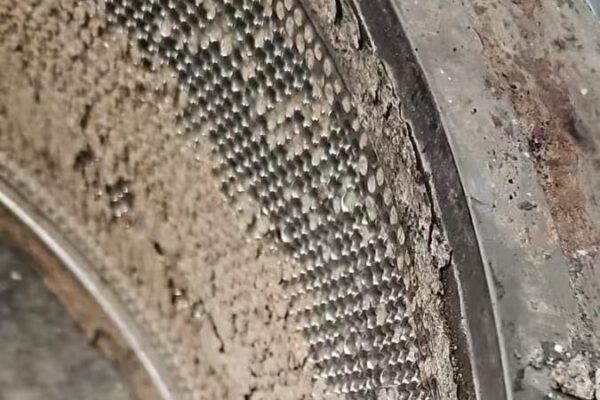
close-up of ring die working surface, die holes, or uneven pellet condition
When formula conditions change, old die parameters may still produce pellets, but they may no longer give stable durability during transport.*
My quick way to separate the likely causes
When I need a fast field judgment, this is the kind of logic I use first.
| If I see this | My first direction |
|---|---|
| Pellets already feel weak right after pelleting | Formula, conditioning, die matching |
| PDI becomes steadily worse after the formula changed | Compression ratio / hole design matching |
| Short plant test is acceptable, but transport result is much worse | Cooling, oil addition, handling damage |
| Same machine, but big differences between raw material batches | Raw material consistency |
| Pellet is acceptable before oil, but clearly worse after | Oil addition |
| Pellets are hard but brittle, with edge breakage | Too much compression or excessive internal stress |
| The problem changes with weather, shift, or throughput | Cooling stability |
The most useful thing to do: test PDI step by step through the process
To be honest, experience can narrow the direction, but the most reliable way is still to test PDI step by step through the process.
I strongly recommend checking at several points:
- right after cooling
- after elevator or conveying
- before and after oil addition
- before packing or loading
Once you do that, many things become much clearer.
For example:
- if PDI already drops after cooling, it points more to front-end structure, conditioning, or cooling
- if PDI stays acceptable after cooling, but drops after conveying, it points more to pellet toughness and handling damage
- if PDI falls mainly after oil addition, it points more to liquid application
- if the result changes strongly with raw material batches, it points more to formula consistency
- if PDI stays generally low across different batches, it points more to die matching or process setup
This kind of staged checking is much more useful than guessing from the final complaint only.
The three places I usually check first
I can talk about many possible factors, but if I am being practical, there are three places I usually pay the most attention to first.
1. Formula changes that were not followed by process changes
A plant changes something in the formula:
- fiber goes up
- starch goes down
- oil level changes
- raw material source changes
- grinding size becomes less consistent
But the die parameters and operating habits stay almost the same.
That is where many problems begin.
2. Conditioning that looks acceptable, but is not really stable
A lot of PDI problems are blamed on the die, while the real weakness started earlier.
If steam dryness is poor, if temperature is unstable, if retention time is too short, or if moisture distribution is uneven, pellets may still form. But the internal structure will not be as strong as people think.
3. Die parameters that no longer match the current formula
I am not saying the die is unimportant. Actually, I think it is very important.
But the real question is not simply whether the die is good or bad.
The real question is whether the die is still right for the job.
That is what matters in the end.
My practical conclusion
If I have to put it very simply, I would say this:
What matters most is not whether the pellet looks good when it leaves the die. What matters is whether the pellet structure is truly stable inside.
And that stability does not come from one single part.
It comes from the formula, conditioning, die matching, cooling, oil application, and handling working together.
That is also how I look at spare parts today.
Of course, ring dies and roller shells matter.
But the real value is not only to supply parts. The real value is to make sure the parameters match the actual application.
Because when the matching is right, results become much more stable.
Are You Facing The Same PDI Problem After Transportation?
If pellets look acceptable in the plant but break down during transportation, the cause is often not only the ring die.
In many cases, formula structure, conditioning, cooling, oil addition, and die parameters need to be checked together.
You can send me:
• your pellet mill model
• die hole size and compression ratio
• main formula structure
• conditioning and cooling conditions
• photos or videos of the pellets and fines
Based on practical experience, I can help you review the possible cause and suggest what to check first.
If you would like me to help review the possible cause, please feel free to contact me here:
Related Pages
- View Our Ring Die Product Page
- Contact Us for Technical Support
FAQ
1. Why is PDI good in the plant but poor after transportation?
Because plant PDI is usually tested shortly after cooling, under limited simulation conditions. Real transport involves repeated vibration, impact, and handling, which reveal internal weakness more clearly.
2. Is higher compression ratio always better for PDI?
No. If it is too low, pellets may be loose. If it is too high, internal stress, micro-cracks, higher energy consumption, and lower output may appear. Matching is more important than simply increasing the number.
3. Does poor transportation PDI always mean the ring die has a quality problem?
Not necessarily. In many cases, the real causes are formula changes, unstable conditioning, cooling stress, handling damage, post-pellet liquid application, grinding inconsistency, or uneven working condition.
4. Why are high-fiber formulas more sensitive?
Because they naturally have weaker binding ability and higher friction in the die hole, so they are more sensitive to conditioning quality, die matching, and overall process stability.
5. Can changing the ring die alone solve this problem?
Sometimes it helps, but often not completely. Transportation PDI is usually a system issue, so formula, conditioning, cooling, oil application, and downstream handling should also be checked.